
Franklin Build India Fund
As on May 29, 2026
|
Franklin Build India Fund As on May 29, 2026 |
|


|
TYPE OF SCHEME
An open ended equity scheme following Infrastructure theme
SCHEME CATEGORY
Thematic - Infrastructure
SCHEME CHARACTERISTICS
Min 80% Equity in Infrastructure theme
INVESTMENT OBJECTIVE
The Scheme seeks to achieve capital appreciation through investments in companies engaged either directly or indirectly in infrastructure-related activities.
DATE OF ALLOTMENT:
September 4, 2009
FUND MANAGER(S):
Ajay Argal & Kiran Sebastian
Sandeep Manam (dedicated for making investments for Foreign Securities)
BENCHMARK:
BSE India Infrastructure Index
The Benchmark name is renamed from S&P BSE India Infrastructure Index to BSE India Infrastructure Index w.e.f. 01st June, 2024.
BASE EXPENSE RATIO# : 1.67%
BASE EXPENSE RATIO# (DIRECT) : 0.83%
#Base Expense Ratio (BER) is the actual expense ratio charged as per the AUM slabs and within the BER limits prescribed in Regulation 66 of SEBI MF regulations. BER excludes brokerage and transaction costs incurred towards execution of trades and the applicable statutory levies as on that date. Brokerage and transaction costs incurred towards execution of trades and statutory levies are charged, at actuals, and is over and above the BER.
For Total Expense Ratio (TER) and break up of TER i.e., BER, brokerage and transaction costs and statutory levies, please refer to daily TER disclosures on our website www.franklintempletonindia.com. For detailed understanding of TER, please refer to the TER note on our website - http://bit.ly/4uHkUph MINIMUM INVESTMENT/
MULTIPLES FOR NEW INVESTORS:
Rs 5000/1 MINIMUM INVESTMENT FOR SIP
Rs 500/1 ADDITIONAL INVESTMENT/
MULTIPLES FOR EXISTING INVESTORS:
Rs1000/1 LOAD STRUCTURE:
Different plans have a different expense
structure
An open ended equity scheme following Infrastructure theme
SCHEME CATEGORY
Thematic - Infrastructure
SCHEME CHARACTERISTICS
Min 80% Equity in Infrastructure theme
INVESTMENT OBJECTIVE
The Scheme seeks to achieve capital appreciation through investments in companies engaged either directly or indirectly in infrastructure-related activities.
DATE OF ALLOTMENT:
September 4, 2009
FUND MANAGER(S):
Ajay Argal & Kiran Sebastian
Sandeep Manam (dedicated for making investments for Foreign Securities)
BENCHMARK:
BSE India Infrastructure Index
The Benchmark name is renamed from S&P BSE India Infrastructure Index to BSE India Infrastructure Index w.e.f. 01st June, 2024.
| TURNOVER: | |
| Portfolio Turnover | 27.85% |
| VOLATILITY MEASURES (3 YEARS): | |
| Standard Deviation | 5.22% |
| Beta | 0.62 |
| Sharpe Ratio* | 1.02 |
| * Annualised. Risk-free rate assumed to be 5.52% (FBIL OVERNIGHT MIBOR) | |
BASE EXPENSE RATIO# (DIRECT) : 0.83%
#Base Expense Ratio (BER) is the actual expense ratio charged as per the AUM slabs and within the BER limits prescribed in Regulation 66 of SEBI MF regulations. BER excludes brokerage and transaction costs incurred towards execution of trades and the applicable statutory levies as on that date. Brokerage and transaction costs incurred towards execution of trades and statutory levies are charged, at actuals, and is over and above the BER.
For Total Expense Ratio (TER) and break up of TER i.e., BER, brokerage and transaction costs and statutory levies, please refer to daily TER disclosures on our website www.franklintempletonindia.com. For detailed understanding of TER, please refer to the TER note on our website - http://bit.ly/4uHkUph MINIMUM INVESTMENT/
MULTIPLES FOR NEW INVESTORS:
Rs 5000/1 MINIMUM INVESTMENT FOR SIP
Rs 500/1 ADDITIONAL INVESTMENT/
MULTIPLES FOR EXISTING INVESTORS:
Rs1000/1 LOAD STRUCTURE:
| Entry Load | : | Nil |
| Exit Load (for each purchase of Units) | : | 1% if redeemed/switchedout within one year of allotment. |
NAV AS OF MAY 29, 2026
| Growth Plan | Rs144.1138 |
| IDCW Plan | Rs41.0254 |
| Direct - Growth Plan | Rs167.1583 |
| Direct - IDCW Plan | Rs49.9687 |
| As per the addendum dated March 31, 2021, the Dividend Plan has been renamed to Income Distribution cum capital withdrawal (IDCW) Plan with effect from April 1, 2021 | |
| FUND SIZE (AUM) | |
| Month End | Rs 3159.55 Crores |
| Monthly Average | Rs 3195.06 Crores |
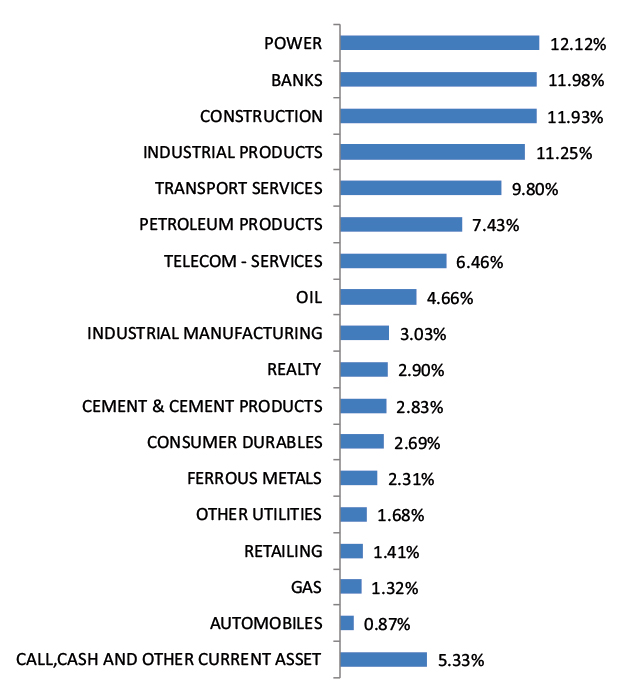
| Company Name | No. of shares | Market Value Rs Lakhs | % of assets |
| Aerospace & Defense | |||
| Hindustan Aeronautics Ltd | 1,62,000 | 6,972.16 | 2.21 |
| Agricultural, Commercial & Construction Vehicles | |||
| Ashok Leyland Ltd | 15,00,000 | 2,331.60 | 0.74 |
| Banks | |||
| Axis Bank Ltd* | 10,00,000 | 12,866.00 | 4.07 |
| HDFC Bank Ltd* | 16,25,000 | 12,098.94 | 3.83 |
| State Bank of India | 7,25,000 | 6,991.90 | 2.21 |
| Cement & Cement Products | |||
| Shree Cement Ltd | 20,000 | 5,055.00 | 1.60 |
| JK Lakshmi Cement Ltd | 2,93,904 | 1,735.06 | 0.55 |
| Construction | |||
| Larsen & Toubro Ltd* | 7,25,000 | 29,554.63 | 9.35 |
| NCC Ltd | 31,00,000 | 4,712.93 | 1.49 |
| Techno Electric & Engineering Co Ltd | 1,80,000 | 1,942.56 | 0.61 |
| Consumer Durables | |||
| Amber Enterprises India Ltd | 50,000 | 3,807.50 | 1.21 |
| Somany Ceramics Ltd | 3,17,957 | 1,567.21 | 0.50 |
| Electrical Equipment | |||
| Suzlon Energy Ltd | 1,20,00,000 | 6,838.80 | 2.16 |
| Ferrous Metals | |||
| Tata Steel Ltd | 39,50,000 | 8,216.79 | 2.60 |
| Finance | |||
| REC Ltd | 31,00,000 | 10,467.15 | 3.31 |
| Gas | |||
| GAIL (India) Ltd | 32,95,522 | 5,421.46 | 1.72 |
| Industrial Manufacturing | |||
| Syrma SGS Technology Ltd | 3,15,000 | 3,428.93 | 1.09 |
| Industrial Products | |||
| Kirloskar Oil Engines Ltd | 4,05,000 | 7,808.40 | 2.47 |
| KEI Industries Ltd | 1,40,000 | 7,374.50 | 2.33 |
| APL Apollo Tubes Ltd | 3,35,000 | 6,134.19 | 1.94 |
| Kirloskar Pneumatic Co Ltd | 3,75,000 | 5,903.63 | 1.87 |
| SKF India Industrial Ltd | 1,00,000 | 2,163.10 | 0.68 |
| Oil | |||
| Oil & Natural Gas Corporation Ltd* | 68,25,000 | 18,113.55 | 5.73 |
| Other Utilities | |||
| Ion Exchange (India) Ltd | 9,50,000 | 3,439.48 | 1.09 |
| Petroleum Products | |||
| Reliance Industries Ltd* | 13,00,000 | 17,175.60 | 5.44 |
| Bharat Petroleum Corporation Ltd | 13,50,000 | 4,024.35 | 1.27 |
| Power | |||
| NTPC Ltd* | 46,00,000 | 17,797.40 | 5.63 |
| Tata Power Co Ltd* | 31,00,000 | 13,043.25 | 4.13 |
| Power Grid Corporation of India Ltd* | 43,50,000 | 12,638.93 | 4.00 |
| CESC Ltd | 30,00,000 | 5,462.70 | 1.73 |
| Realty | |||
| Sobha Ltd | 5,47,553 | 7,764.30 | 2.46 |
| Retailing | |||
| Indiamart Intermesh Ltd | 1,80,000 | 3,628.26 | 1.15 |
| Telecom - Services | |||
| Bharti Airtel Ltd* | 7,10,000 | 12,985.90 | 4.11 |
| Transport Services | |||
| Interglobe Aviation Ltd* | 4,20,000 | 18,501.00 | 5.86 |
| Delhivery Ltd | 21,00,000 | 9,499.35 | 3.01 |
| Gateway Distriparks Ltd | 35,00,000 | 1,960.00 | 0.62 |
| Container Corporation Of India Ltd | 3,00,000 | 1,390.95 | 0.44 |
| Total Equity Holdings | 3,00,817.44 | 95.21 | |
| Total Holdings | 3,00,817.44 | 95.21 | |
| Call,cash and other current asset | 15,137.43 | 4.79 | |
| Total Asset | 3,15,954.87 | 100.00 | |
| * Top 10 holdings | |||
@ TREPs /Reverse Repo : 4.60%, Others (Cash/ Subscription receivable/ Redemption payable/ Receivables on sale/Payable on Purchase/ Other Receivable / Other Payable) : 0.19%
Please click here for Product Label & Benchmark Risk-o-meter.